Vivasayam Pesuvom logoVIVASAYAMPESUVOM
Home
Rhinoceros Beetle

Rhinoceros Beetle

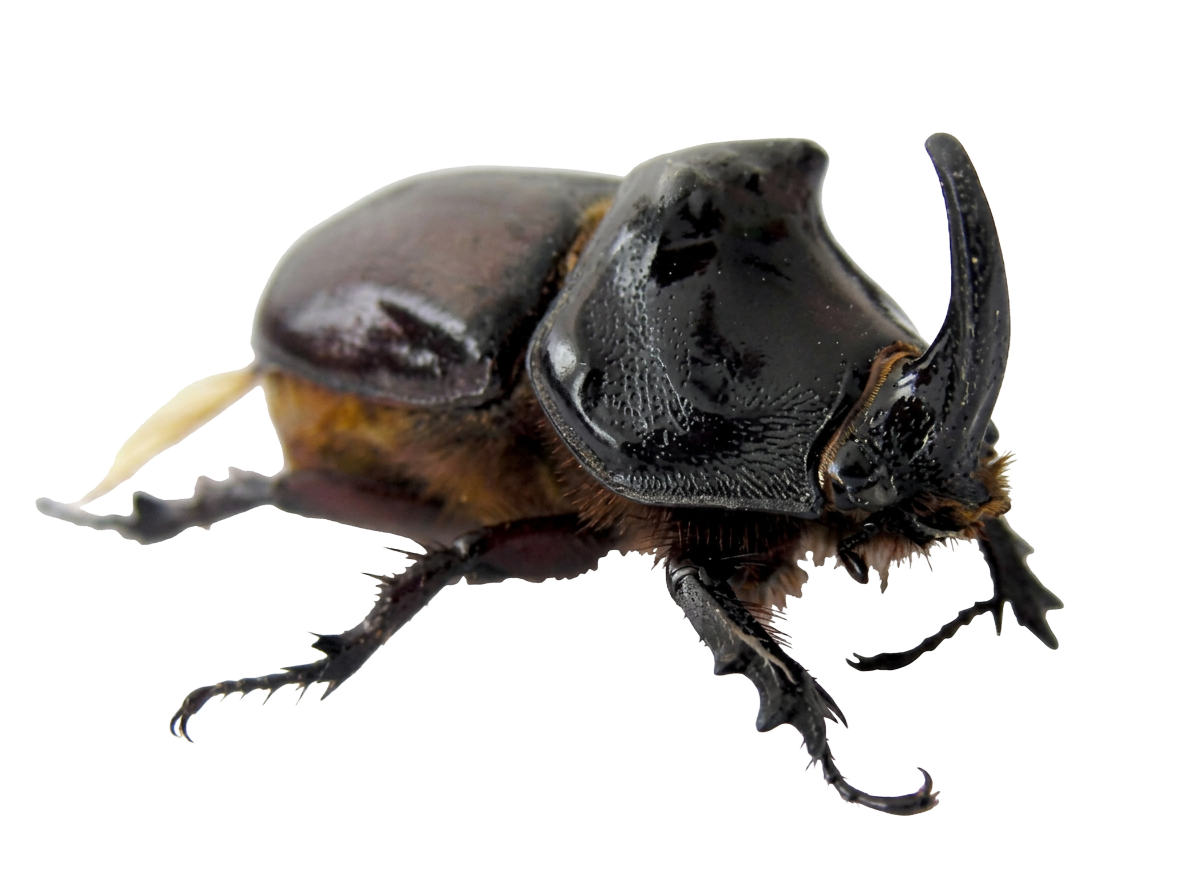
Oryctes rhinoceros

Rhinoceros Beetle (Oryctes rhinoceros) is one of the major insect pests affecting coconut palms. The adult beetle mainly attacks the crown and growing point, where it feeds on tender tissues. It can attack coconut palms at different ages, but regular monitoring and early management are important to prevent serious damage.

How to identify infestation?

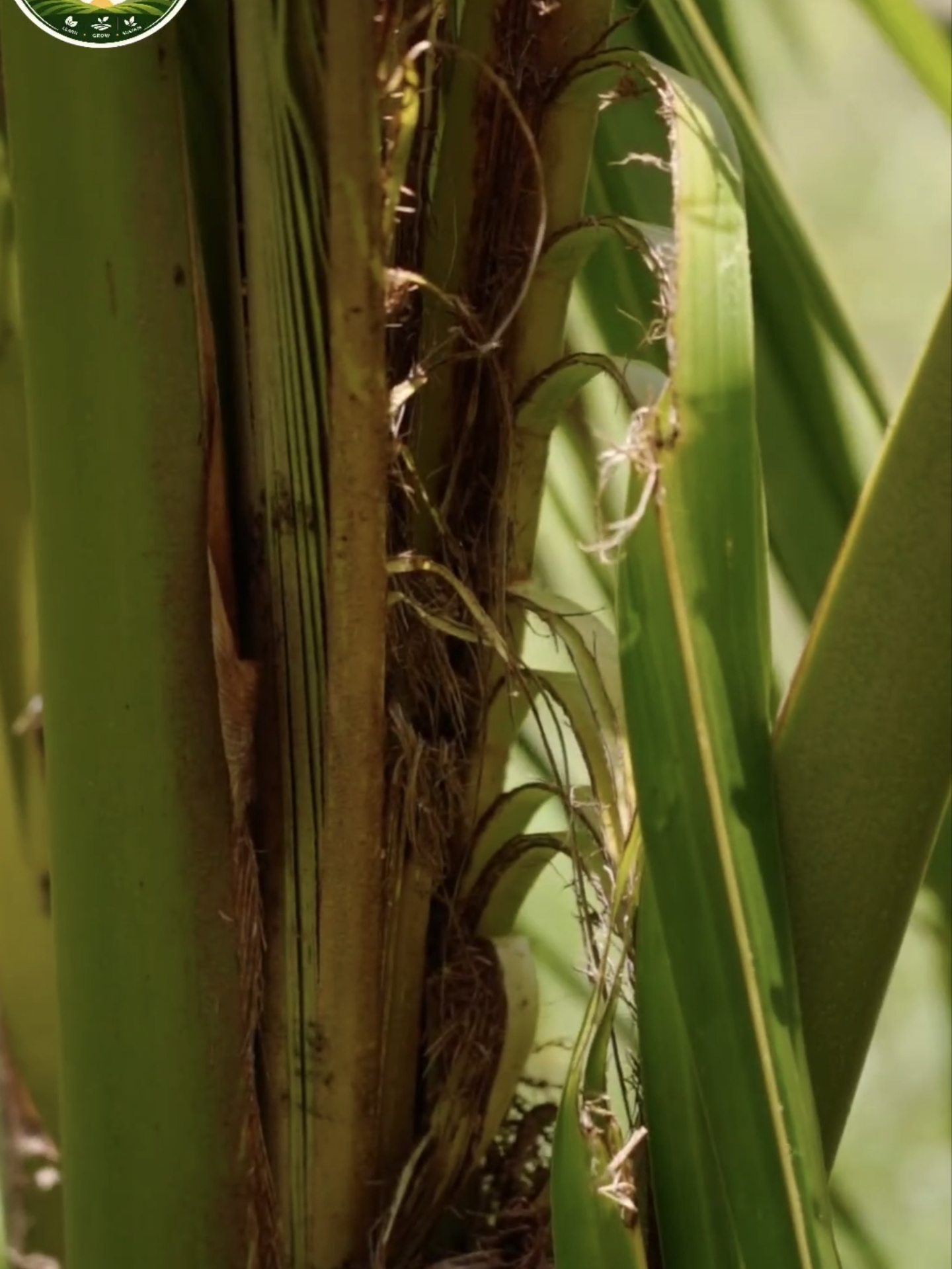
  • Holes around the crown and growing region.
  • Watery/sap-like liquid leaking from the damaged area, sometimes appearing like the tree is 'bleeding'.
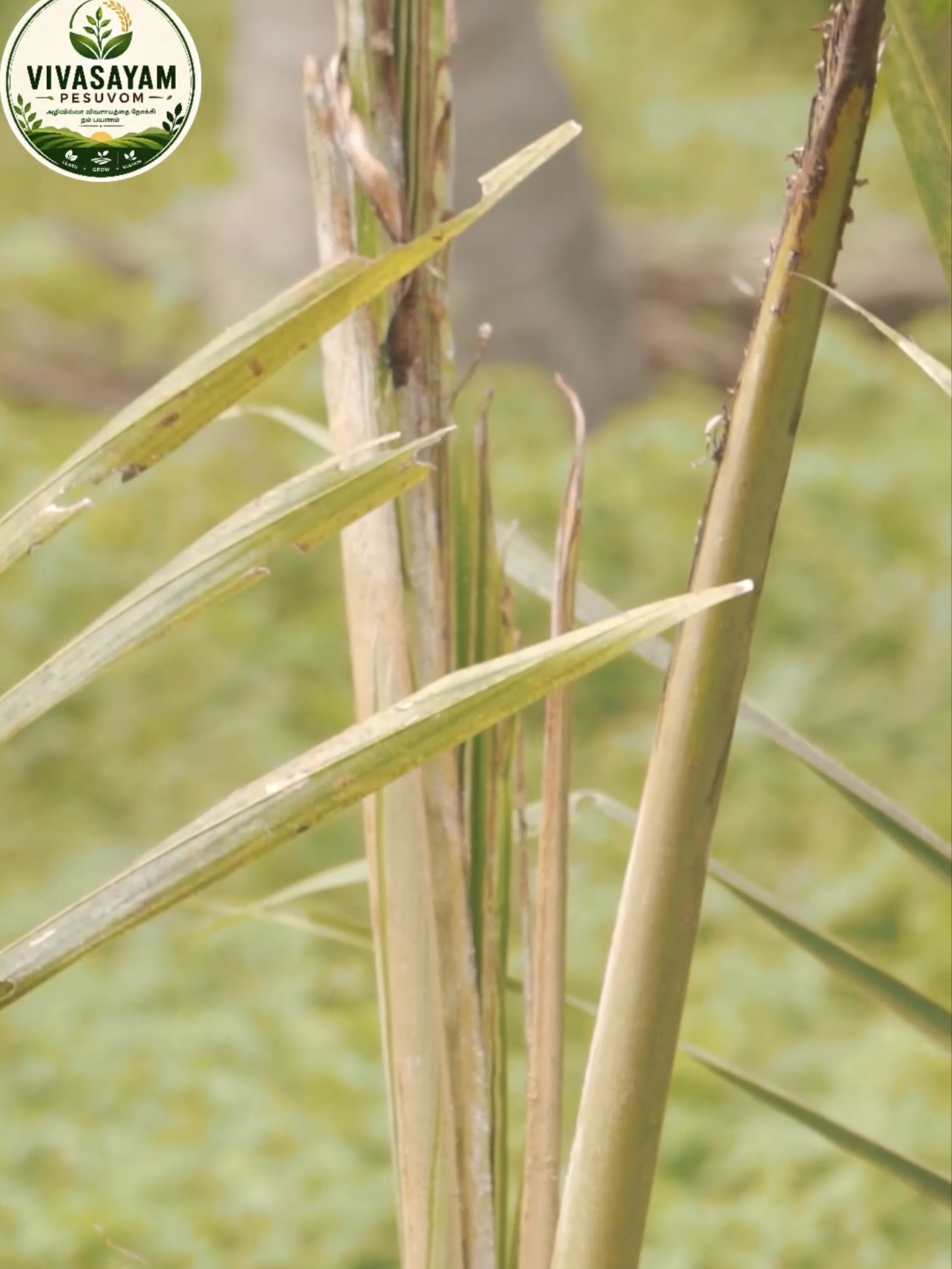
  • Newly emerging leaves may become damaged, broken or distorted.
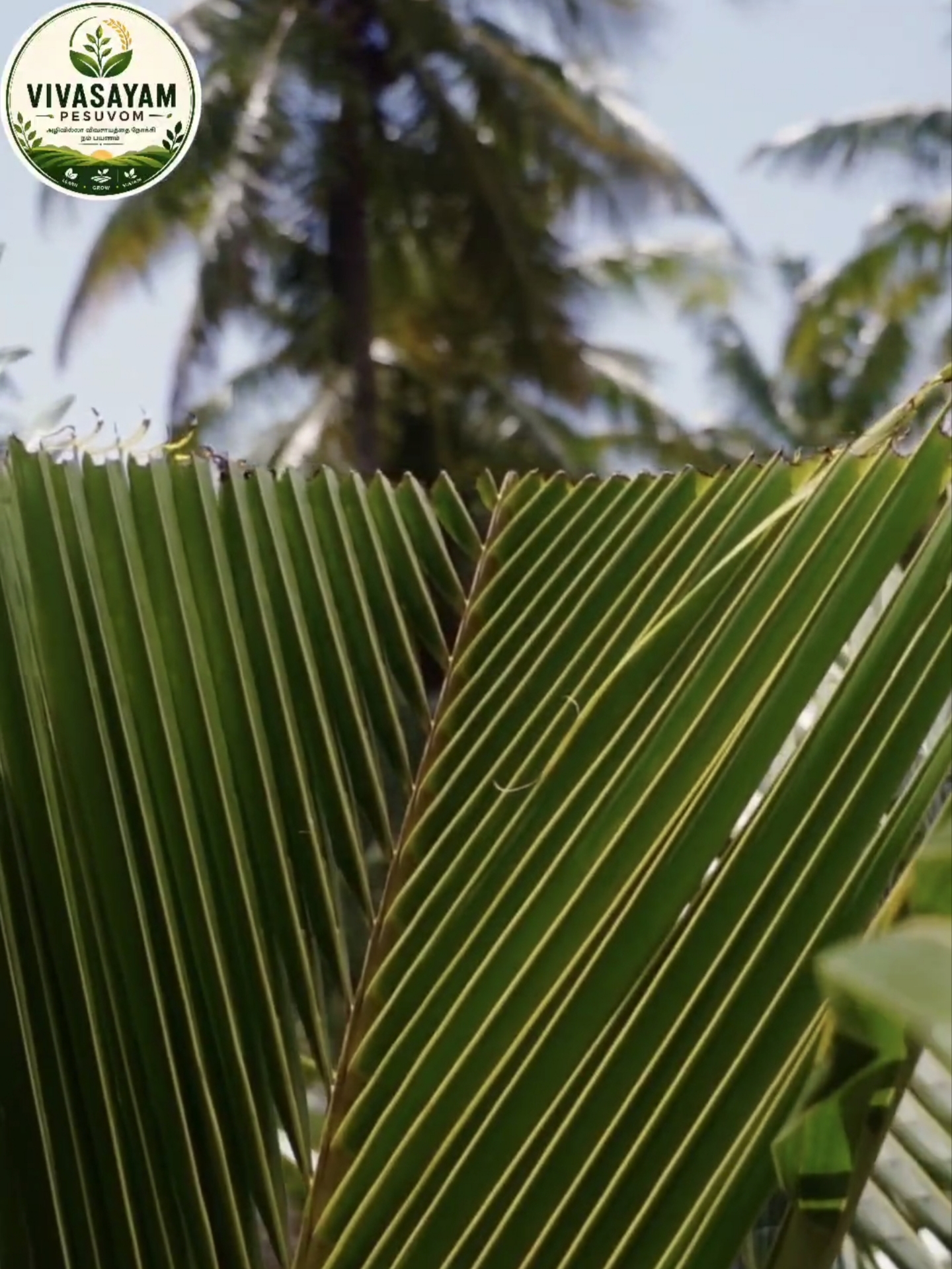
  • Characteristic V-shaped cuts can appear on the leaves.
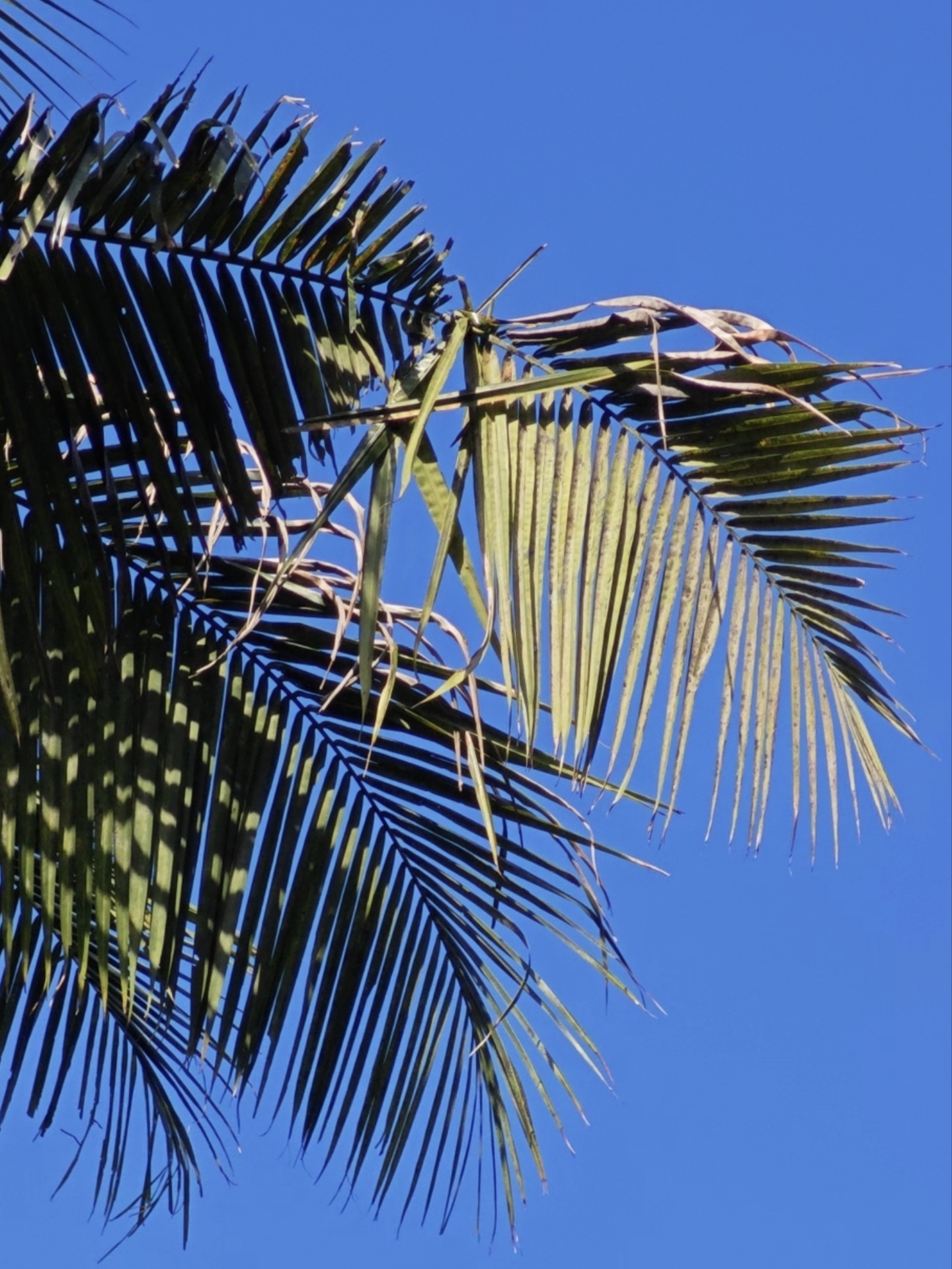
  • Leaves may suddenly turn yellow.
  • The crown may become weak and unhealthy.
  • The overall strength and growth of the palm may decrease.

How does it damage the palm?

Rhinoceros Beetle — Bore hole at the crown with fibrous chewed waste.
Bore hole at the crown with fibrous chewed waste.
Rhinoceros Beetle — Characteristic V-shaped cuts on the fronds.
Characteristic V-shaped cuts on the fronds.
Rhinoceros Beetle — Newly emerging spear leaf broken and distorted.
Newly emerging spear leaf broken and distorted.
Rhinoceros Beetle — Weak crown with yellowing fronds.
Weak crown with yellowing fronds.
  • The adult beetle enters the crown and bores into the tender tissues of the growing point.
  • While feeding, it damages newly developing leaves and the central growing region.
  • This results in the typical V-shaped cuts, broken emerging leaves and crown damage.
  • The wounds created by Rhinoceros Beetle can also provide suitable entry points for Red Palm Weevil.
  • Early control of Rhinoceros Beetle is important for preventing further pest problems.

Management

1. Preventive Crown Management

  • Mix 1 handful of small stones/gravel with 2 handfuls of river sand.
  • Apply the mixture into the crown/growing point of the coconut palm.
  • The fine particles can enter the feeding area and get attached around the beetle's body/neck region, restricting its movement and helping to kill the beetle.
  • This method can be used as a preventive measure before severe infestation develops.
2. Naphthalene Balls

  • 2 naphthalene balls per coconut tree can be used as another management method for Rhinoceros Beetle.
  • Place them appropriately in the crown area to help deter/control the beetle.

3. Regular Monitoring

  • Regularly inspect the crown region.
  • Check newly emerging leaves.
  • Look for V-shaped cuts.
  • Look for bore holes.
  • Check for sap/oozing from damaged portions.
  • Early detection allows faster management and helps prevent severe crown damage.

4. Why Control Rhinoceros Beetle Early?

  • Rhinoceros Beetle damage does not stop with the initial feeding injury.
  • The wounds created by the beetle can make the palm more vulnerable to Red Palm Weevil infestation.
  • Once Red Palm Weevil enters the palm, its larvae can cause severe internal damage.
  • Fewer wounds mean lower risk of Red Palm Weevil entry.
  • Better protection of the coconut palm.

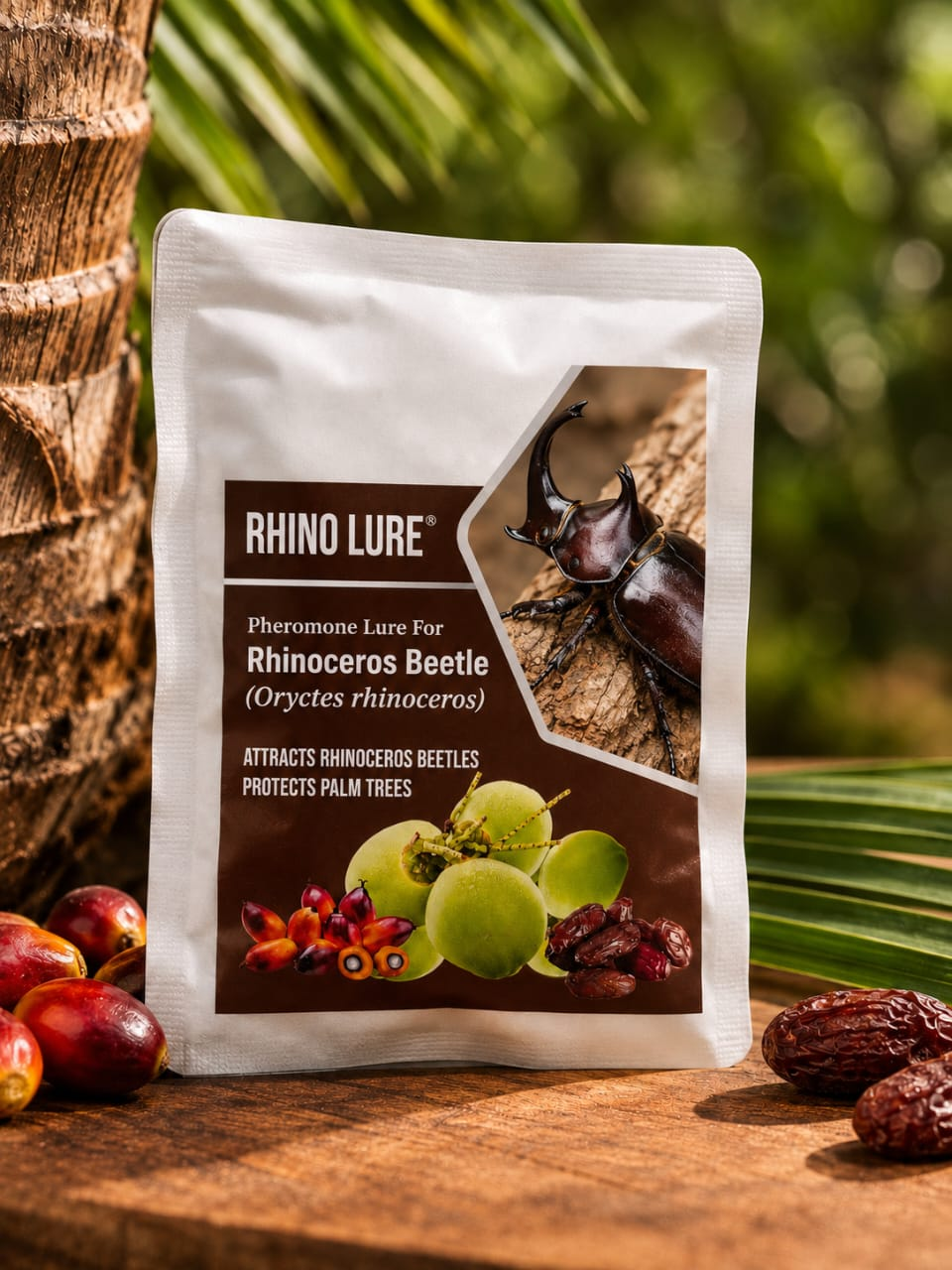
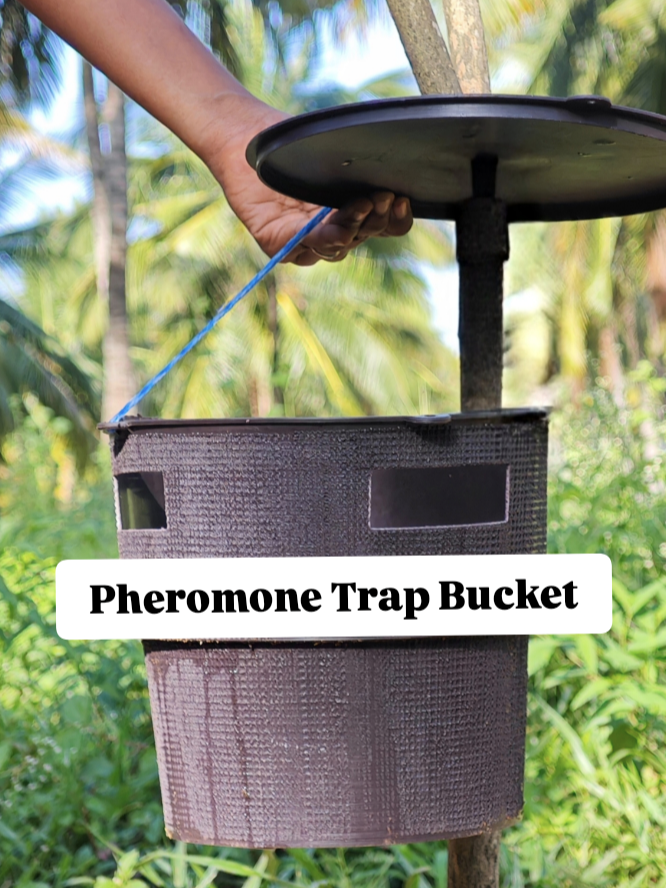
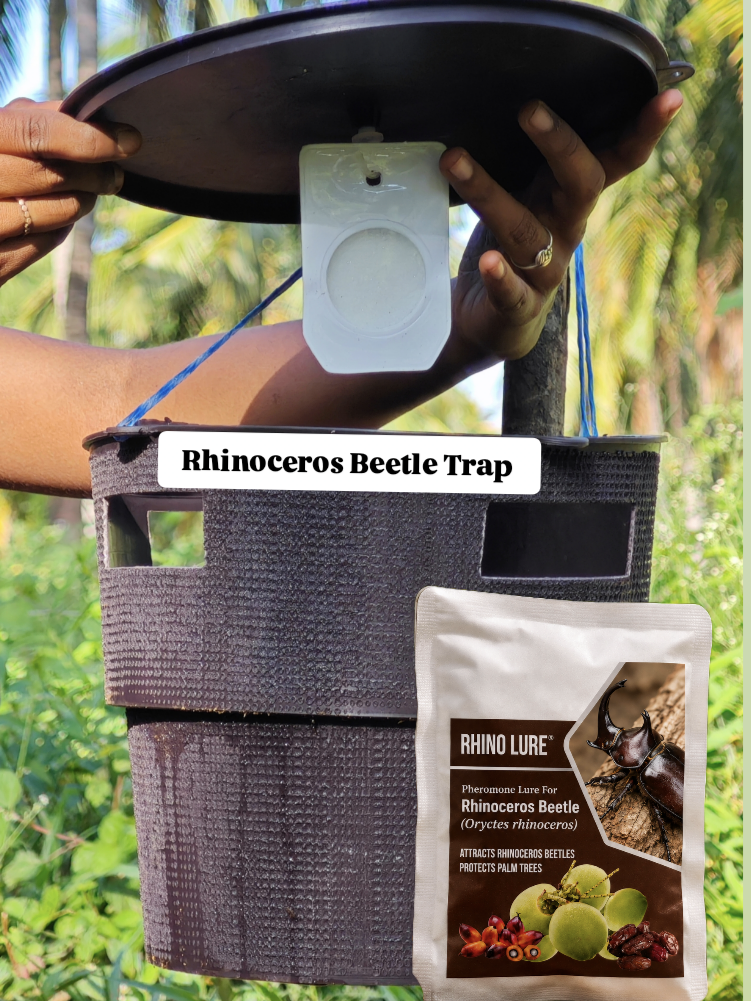
5. Our Rhinoceros Beetle Management Trap

  • Our Rhinoceros Beetle Management Trap is designed to attract adult Rhinoceros Beetles.
  • It helps reduce their population in the plantation.
  • Recommended Placement: 1 Trap per Acre.
  • For better coverage, place the trap strategically in the plantation so that adult beetles can be attracted and trapped.
  • The trap helps by: Attracting adult beetles → Trapping them → Reducing adult population → Reducing further breeding pressure → Protecting coconut palms.
  • The trap should be used as part of an Integrated Pest Management (IPM) approach along with regular monitoring and other recommended management practices.

6. Protect Your Coconut Palms

  • Don't wait until the crown is severely damaged.
  • Identify early.
  • Trap regularly.
  • Monitor continuously.
  • A healthy coconut plantation starts with timely pest management.

Remedies you can order

FARMER HELP