Vivasayam Pesuvom logoVIVASAYAMPESUVOM
Home
Red Palm Weevil

Red Palm Weevil

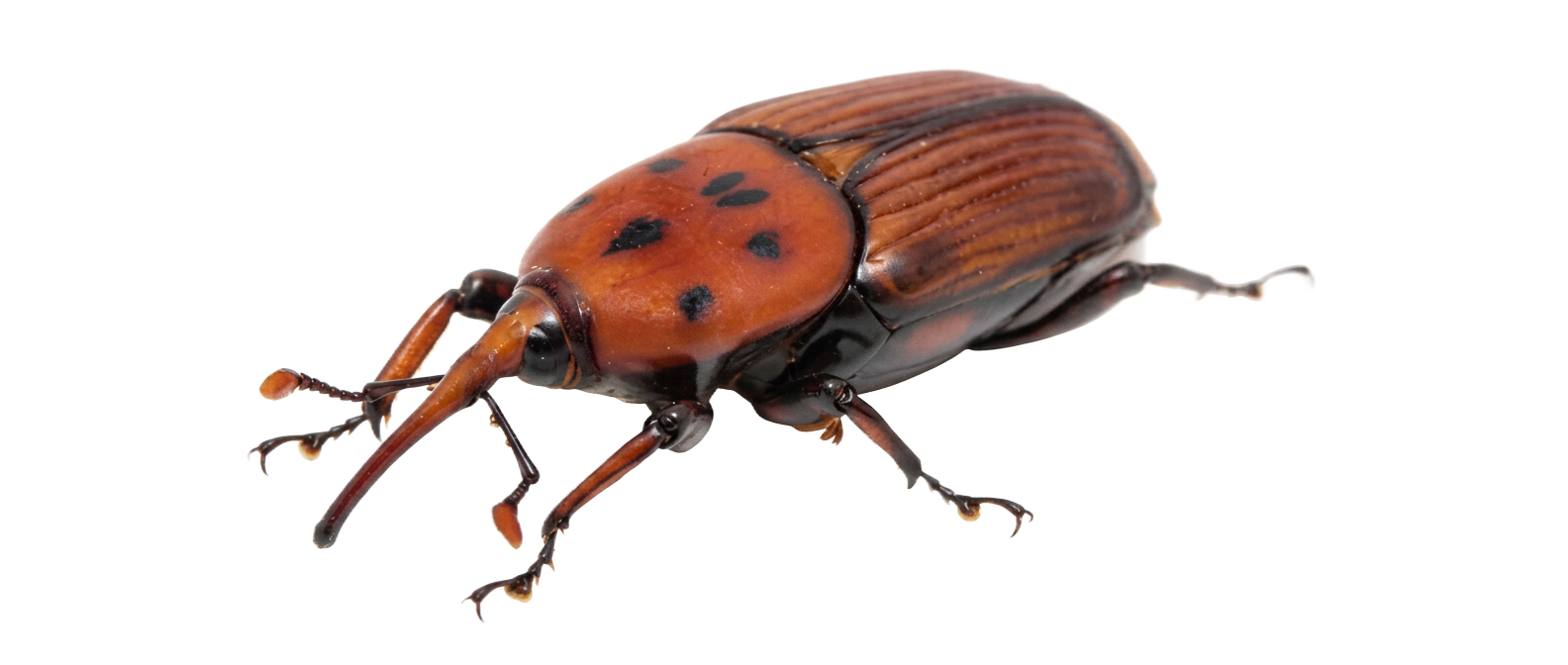
Rhynchophorus ferrugineus

Red Palm Weevil (Rhynchophorus ferrugineus) is one of the most destructive insect pests of coconut and other palms. Unlike pests that mainly feed externally, Red Palm Weevil can cause severe internal damage because its larvae develop and feed inside the palm. Adult weevils are attracted to wounded and damaged portions of the palm and can enter through existing holes and injuries.

How to identify infestation?

  • Holes and openings in the trunk or crown region.
  • Watery/sap-like liquid oozing from the damaged area.
  • The palm may appear as if blood is leaking from the trunk.
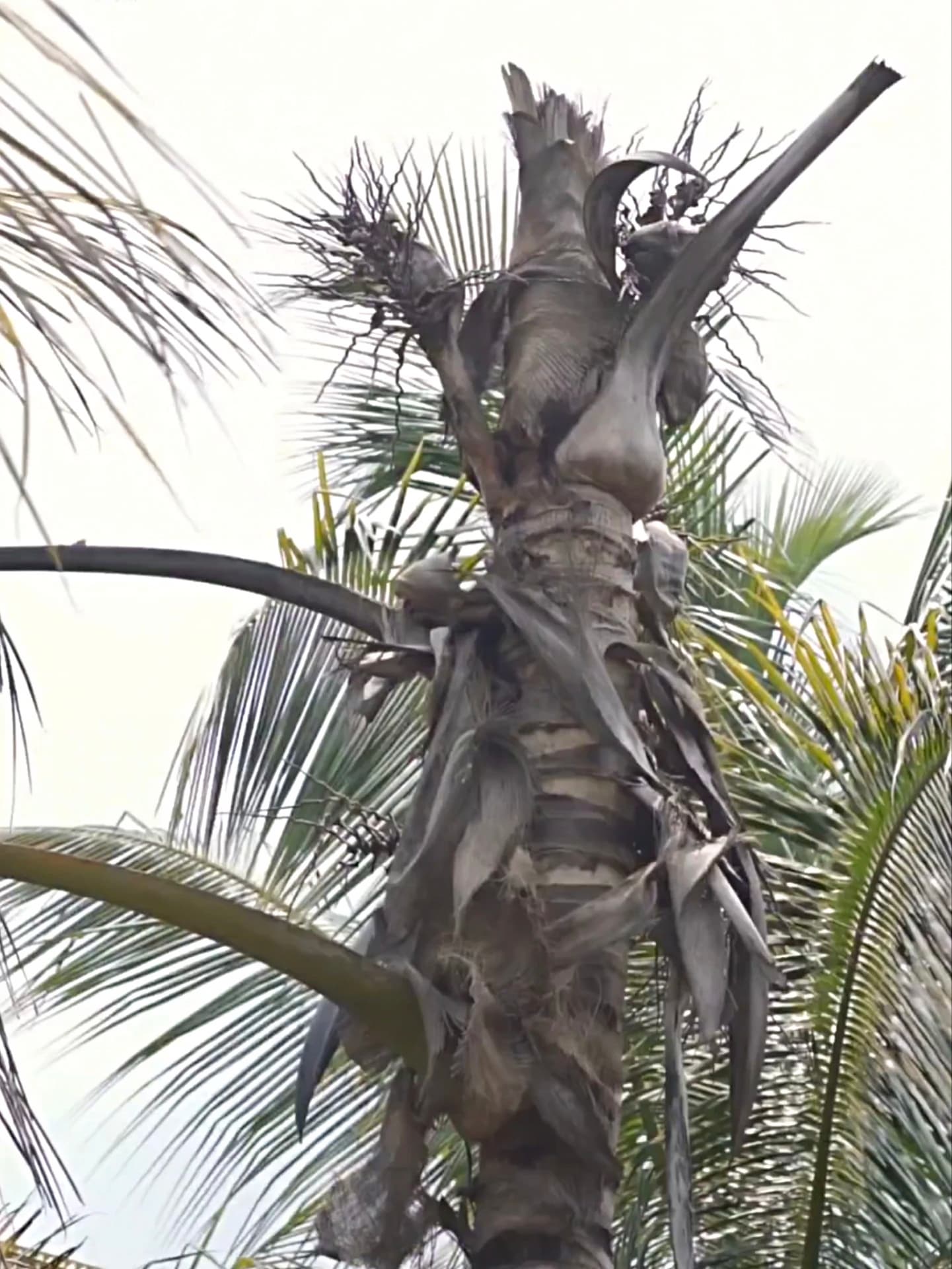
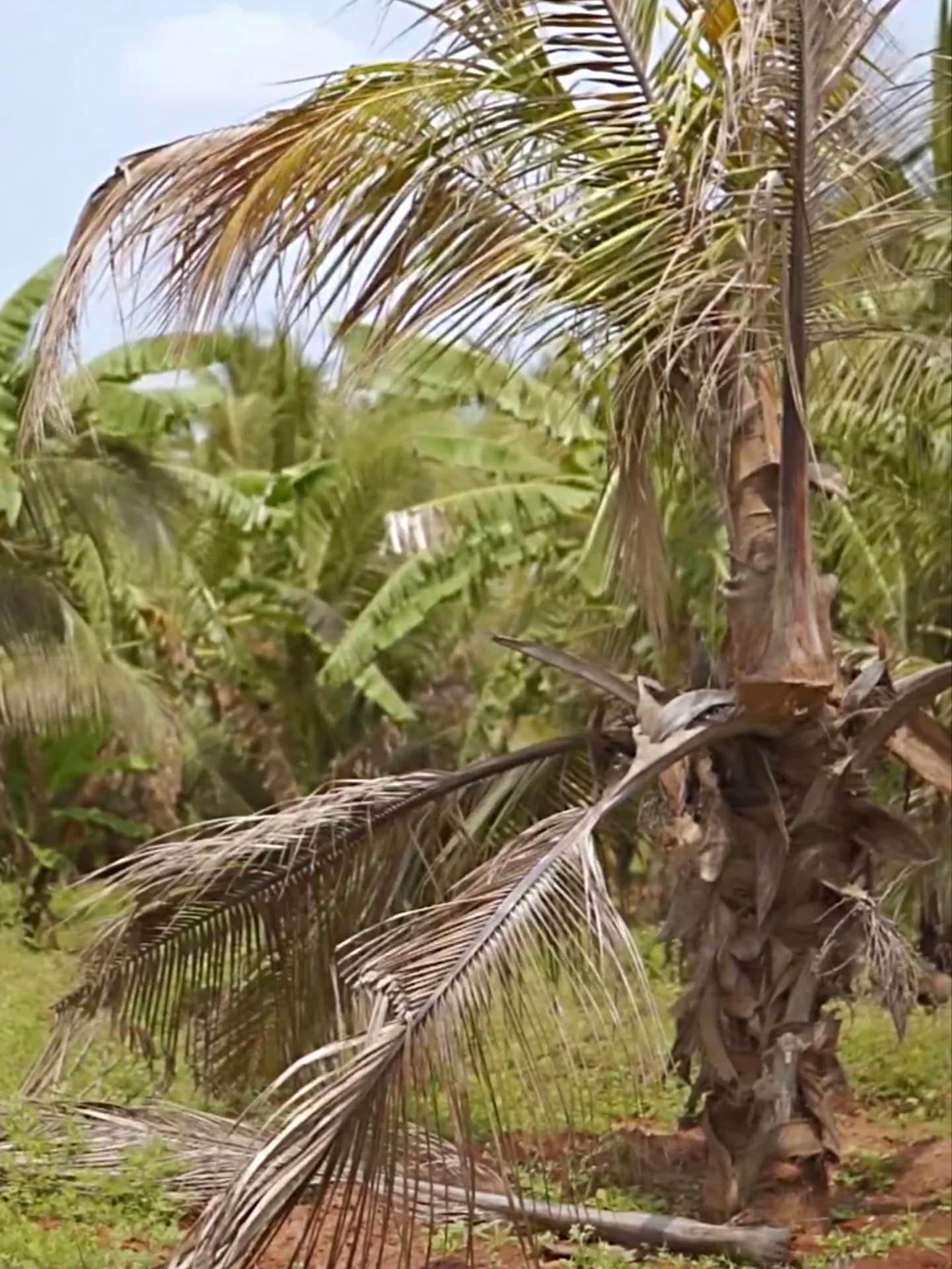
  • Young leaves may turn yellow and wilt.
  • Newly emerging leaves may become weak, damaged or break.
  • The crown gradually becomes weak and unhealthy.
  • Internal tunnelling and feeding damage may occur.
  • The overall strength of the palm progressively decreases.
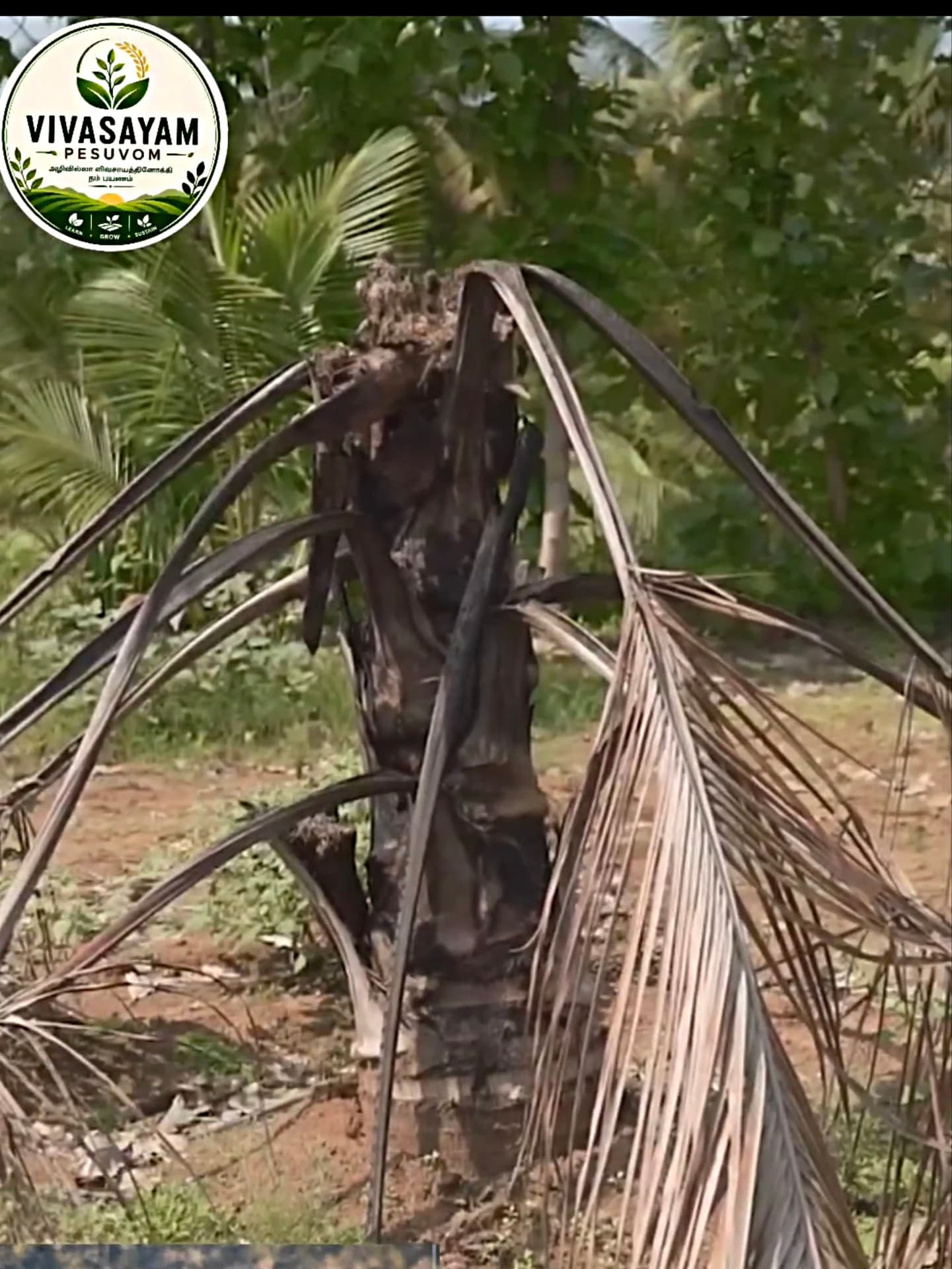
  • In severe infestation, the entire palm may dry and eventually die.
  • Since much of the damage occurs inside the palm, serious internal damage may develop before the symptoms become obvious.

How does it damage the palm?

Red Palm Weevil — Trunk hole oozing brown viscous liquid.
Trunk hole oozing brown viscous liquid.
Red Palm Weevil — Chewed fibre and ooze at the base of the palm.
Chewed fibre and ooze at the base of the palm.
Red Palm Weevil — Central fronds wilting and crown collapsing.
Central fronds wilting and crown collapsing.
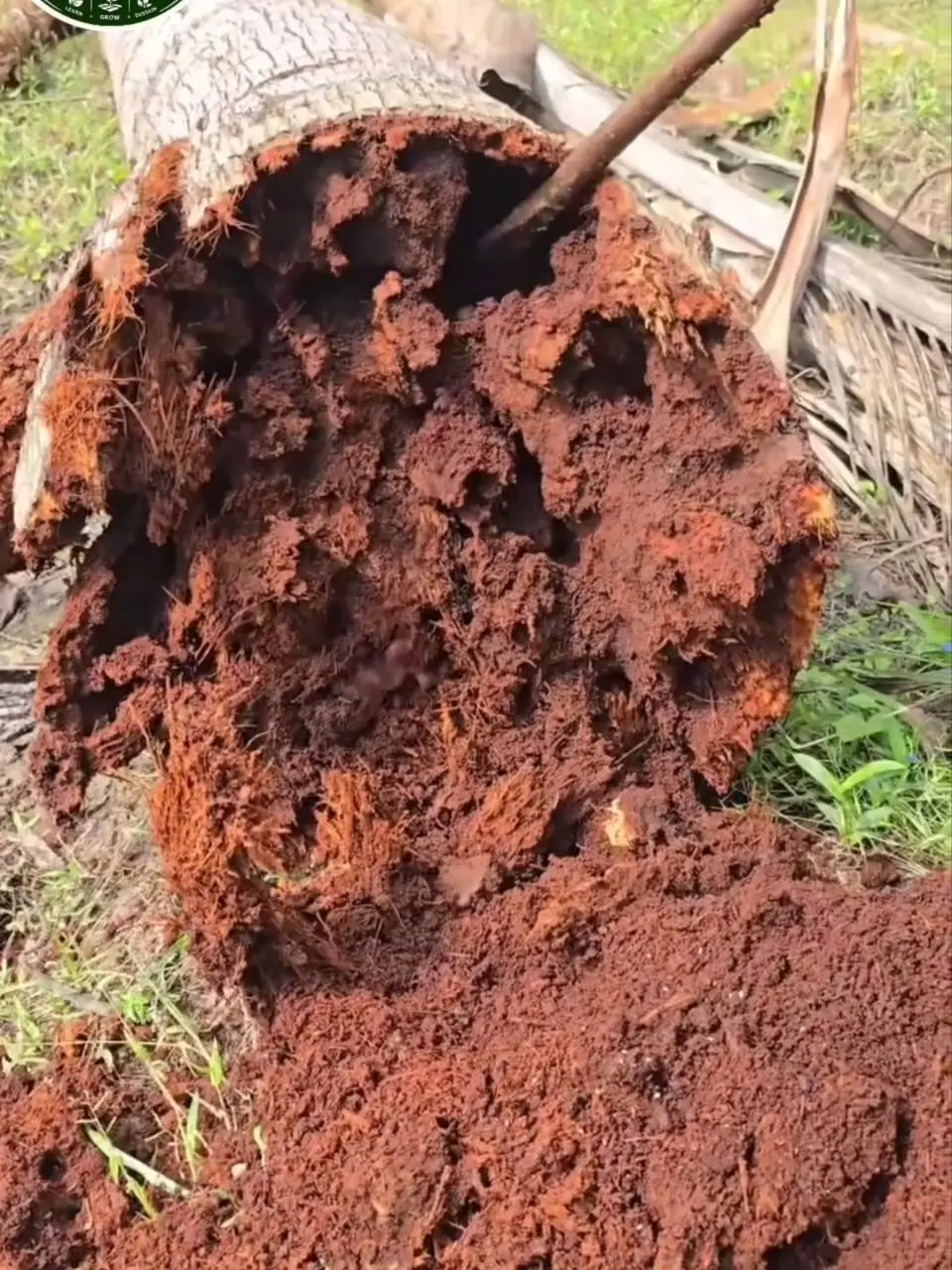
Red Palm Weevil — Trunk hollowed out by tunnelling grubs.
Trunk hollowed out by tunnelling grubs.
  • The adult Red Palm Weevil can enter through injuries, cracks and holes in the palm.
  • Once inside, the adult lays eggs in suitable tissues.
  • The eggs hatch into larvae (grubs).
  • The grub is the major damaging stage.
  • The larvae tunnel through the internal tissues of the trunk and crown and continuously feed on them.
  • Egg → Larva/Grub → Tunnelling → Internal tissue damage → Weakening of the palm.
  • As the larval population increases, the internal tissues are progressively destroyed, eventually affecting the strength and survival of the palm.

Management

1. Connection with Rhinoceros Beetle

  • Rhinoceros Beetle and Red Palm Weevil can be closely associated with damaged coconut palms.
  • Rhinoceros Beetle feeding can create holes and injuries in the palm. These damaged portions can provide suitable entry points for Red Palm Weevil.
  • Therefore, controlling Rhinoceros Beetle can also help reduce the chances of Red Palm Weevil infestation.
  • However, Red Palm Weevil can also enter through other injuries caused to the palm.
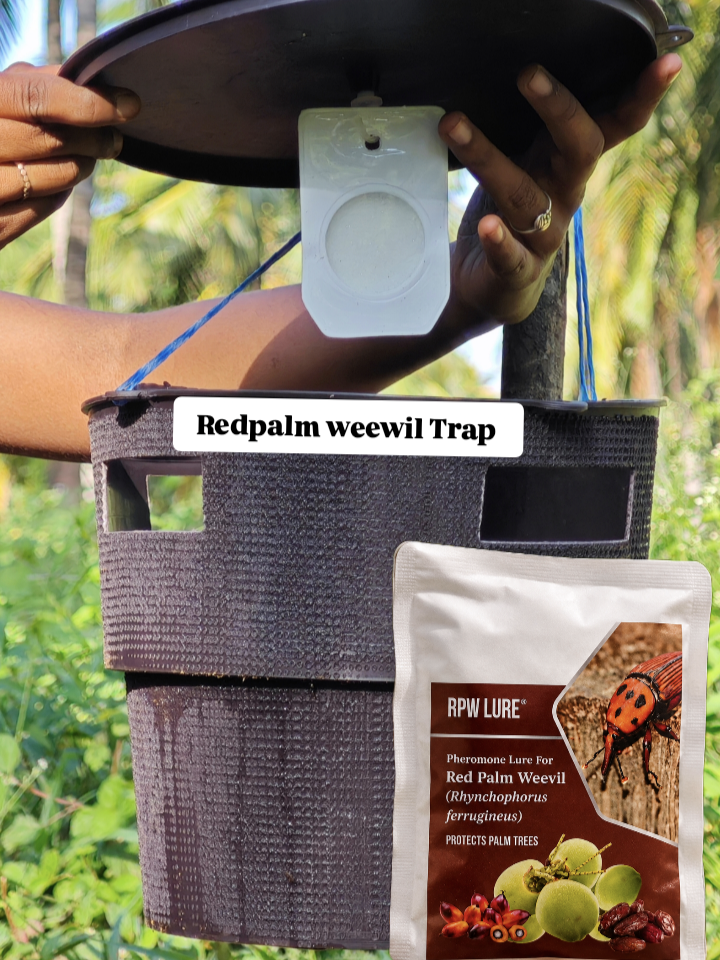
2. Pheromone Trap

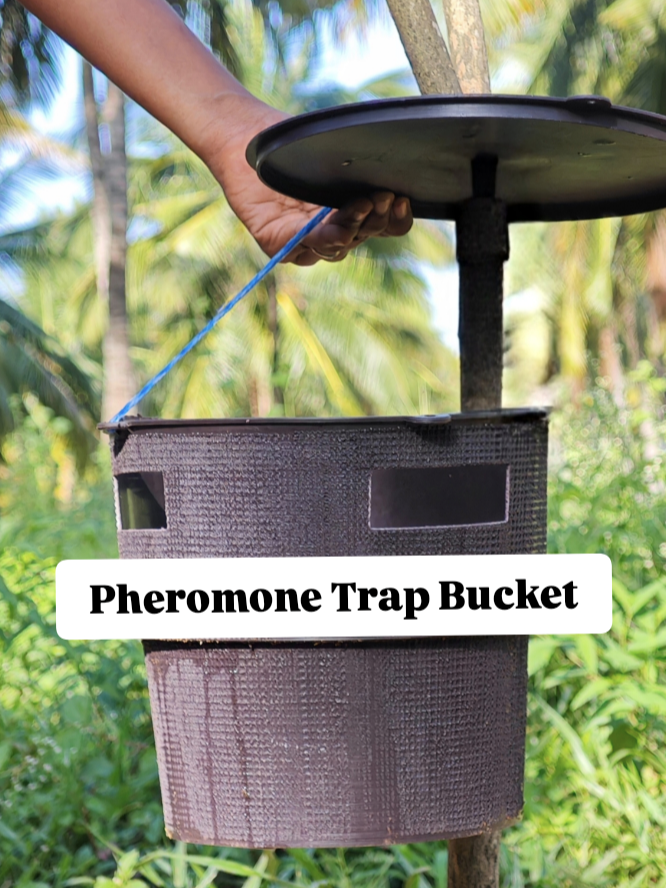
  • Pheromone traps are an important method for monitoring and reducing Red Palm Weevil populations.
  • The pheromone attracts both male and female adult weevils towards the trap.
  • Once the adults are trapped: Adult population ↓ → Reproduction ↓ → New infestation pressure ↓
  • Recommended Trap Density: 1 Pheromone Trap / Acre.

3. Where Should the Trap Be Placed?

  • The trap can be placed along the border of the coconut plantation rather than simply hanging it on a coconut tree inside the field.
  • Border placement can help attract adult weevils approaching the plantation and reduce their entry into the crop.

4. Prevent Injuries to Coconut Palms

  • Avoid unnecessary injuries and wounds to the trunk and crown.
  • Damaged portions can provide suitable entry points for Red Palm Weevil.
  • Therefore: Healthy palm surface → Fewer entry points → Lower infestation risk.

5. Regular Monitoring

  • Regularly inspect coconut palms for:
  • Fresh holes
  • Oozing/sap
  • Crown damage
  • Yellowing or wilting leaves
  • Broken emerging leaves
  • Signs of internal infestation
  • Early detection is much easier to manage than advanced infestation.

6. How Much Can the Population Be Reduced?

  • Pheromone trapping can help reduce the adult Red Palm Weevil population by approximately 70–80%, depending on the infestation and field conditions.
  • By trapping adult males and females, the breeding population is reduced, which helps decrease the number of new infestations.
  • However, trapping is mainly a population-reduction and preventive management method. Palms that are already heavily infested internally require additional appropriate management.

7. Our Red Palm Weevil Pheromone Trap

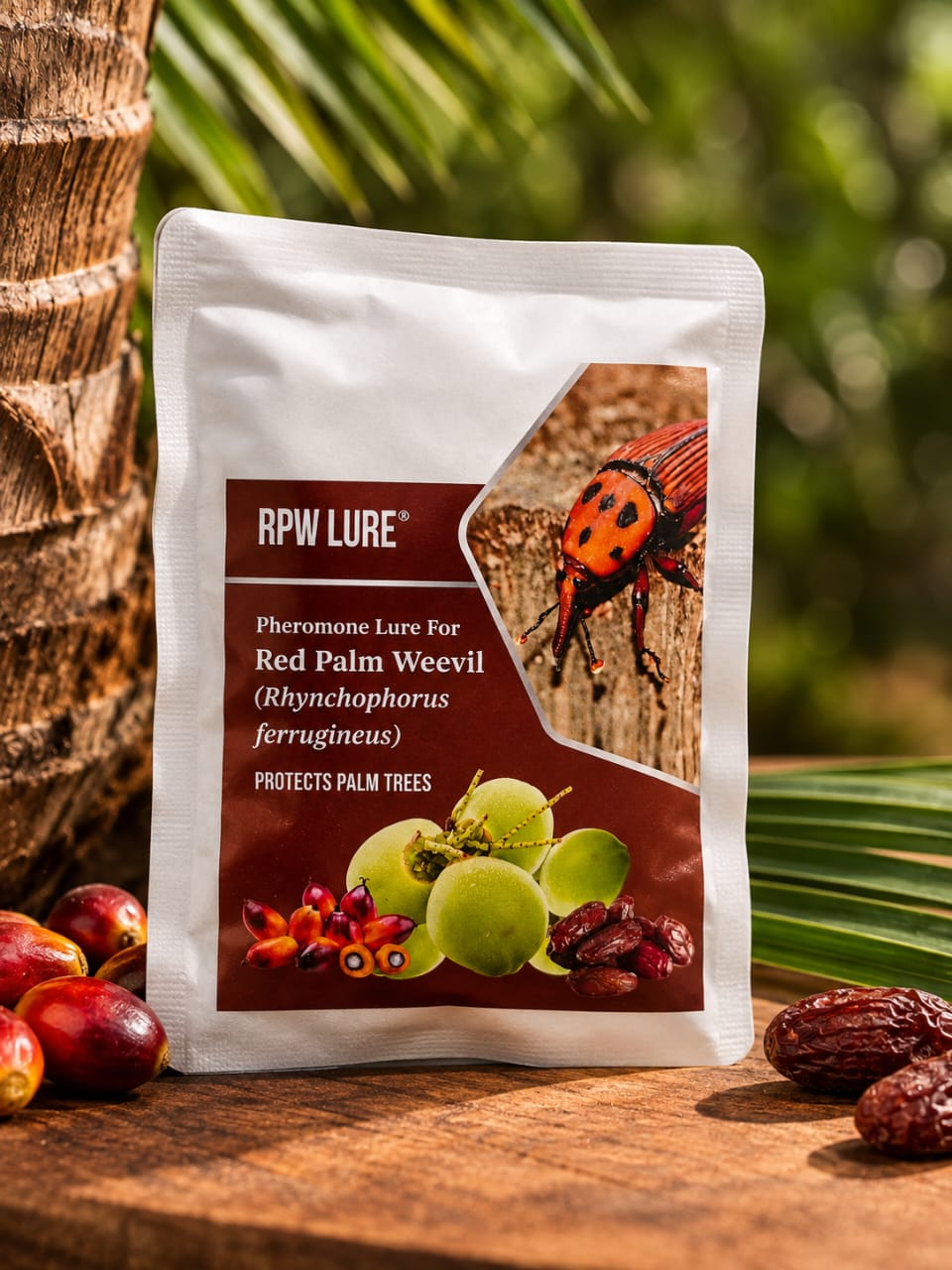
  • Our Red Palm Weevil Pheromone Trap is designed to attract and trap adult male and female Red Palm Weevils and help reduce their population in coconut plantations.
  • Recommended Usage: 1 Trap / Acre.
  • For better field protection, position the trap strategically along the plantation border and monitor it regularly.
  • Why Use It? Attract adults → Trap adults → Reduce population → Reduce reproduction → Reduce infestation pressure.
  • For best results, combine pheromone trapping with: Regular monitoring + Prevention of palm injuries + Rhinoceros Beetle management + Timely action.

8. Protect Your Coconut Palms

  • Red Palm Weevil can remain hidden inside the palm while causing progressive internal damage.
  • Don't wait until the palm becomes severely damaged.
  • Detect Early. Trap Regularly. Protect Your Coconut Plantation.

Remedies you can order

FARMER HELP